Pharmacy Students’ Resonance With Neurological and Psychological Conditions Through Art
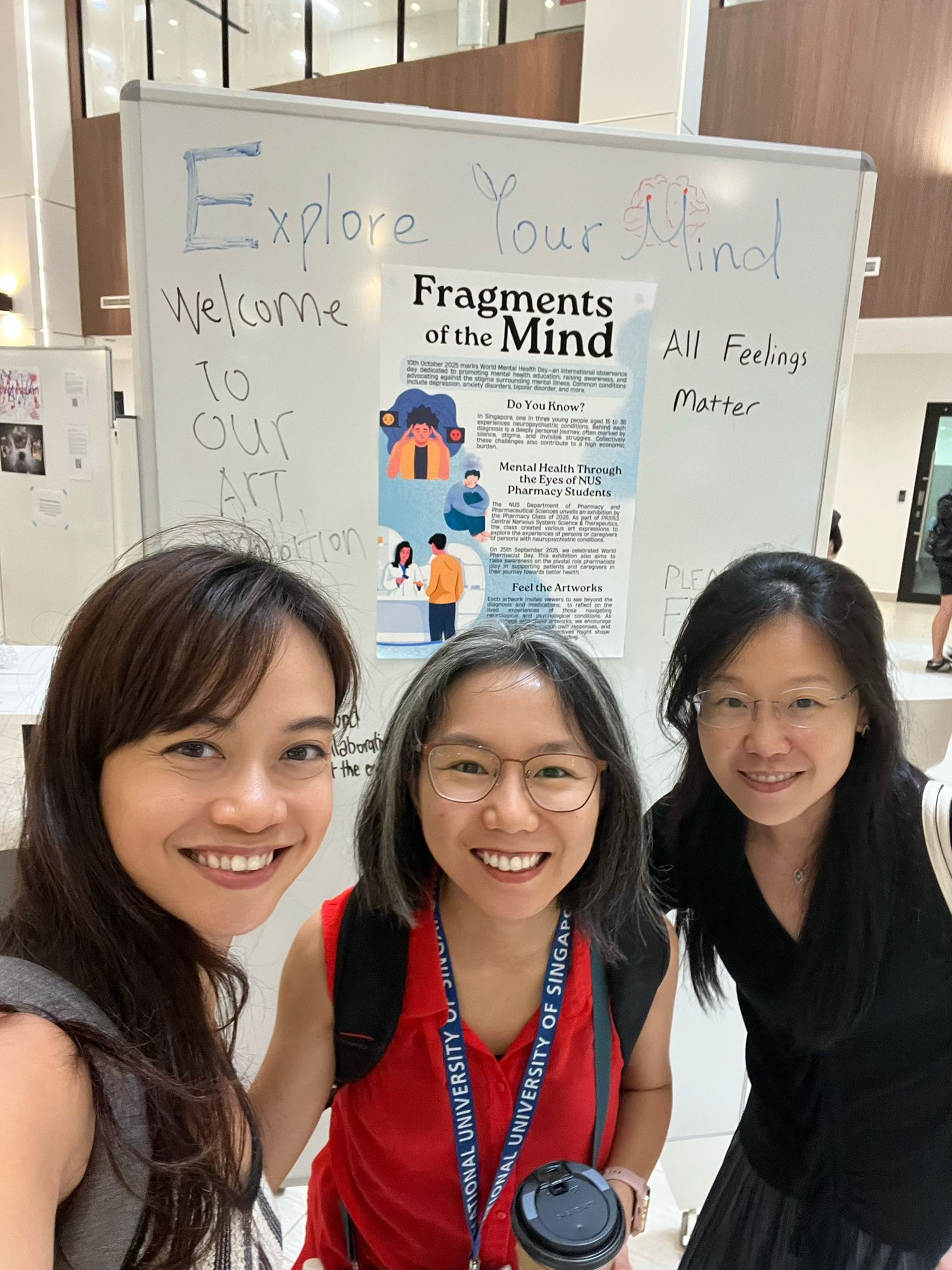
To commemorate World Mental Health Day, the NUS Department of Pharmacy and Pharmaceutical Sciences unveiled the exhibition “Fragments of the Mind” from 3 – 17 October at the Medical+Science Library. The exhibition featured artistic works created by students from the Class of 2026 enrolled in PR3153 Central Nervous System: Science & Therapeutics. These works explored the humanistic aspects of neurological and psychological conditions.
Each artwork invited viewers to see beyond diagnosis and medications, to reflect on the lived experiences of those navigating neurological and psychological disorders. Through these works and exhibition, the class hoped to foster greater empathy and awareness for patients and their caregivers.
Below, we share our reflections and that of a few other classmates on their experience of working on the project.
The Humanity Behind Illness
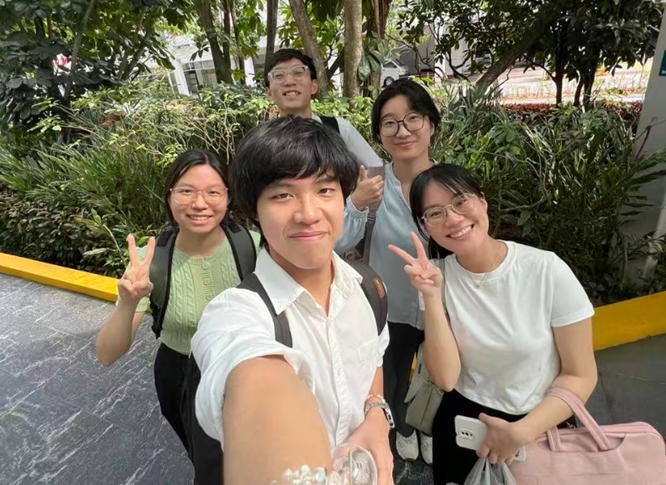
Our companion poems portray the experiences of a ballerina with Alzheimer’s disease (AD) and her caregiver, inspired by Still Alice and Marta González. The Swan’s Last Dance expresses the ballerina’s struggle with identity loss and confusion, while The Last Pas de Deux conveys her husband’s grief and enduring love. Together, they form a duet of loss and love, ending with the ballerina “revived” by Swan Lake, symbolising the enduring power of music and memory.
This project deepened our understanding of AD and highlighted the pharmacist’s role in supporting patients and caregivers through medication management, education, and emotional care. It also strengthened our compassion and teamwork as we explored how art can convey the humanity behind illness.
The Germination of Compassion
Through this project, I developed a deeper appreciation for the emotional complexity and darkness often embedded within artists’ works, particularly those created by individuals struggling with mental health conditions. The project offered a valuable opportunity to explore the artists’ backgrounds in depth and to synthesize our own artwork by integrating both the inspiration drawn from their stories and the statistical burden of the associated mental disorders. Additionally, collaborating with my team-based learning (TBL) members allowed me to recognise their diverse talents and strengths, enhancing both teamwork and creativity.
Most significantly, this experience nurtured a greater sense of empathy and compassion in me, as it encouraged me to adopt the perspective of patients and better understand the challenges they face in their mental health journeys.
The Transformation of Science into Creativity
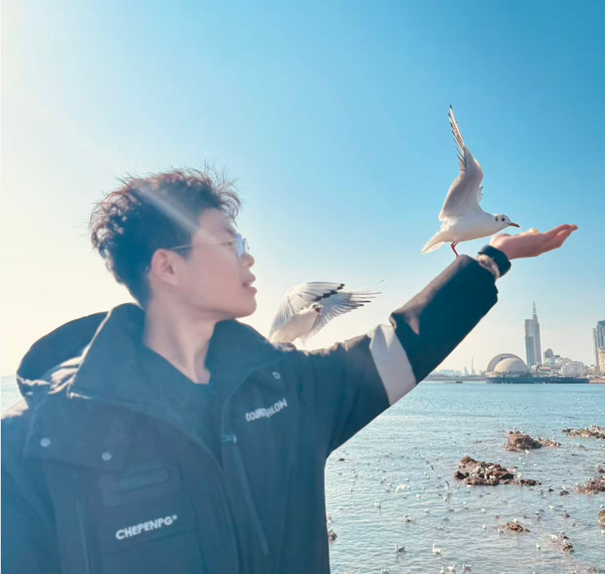
Through this project, I gained valuable insight into the process of translating complex scientific concepts into creative expression, while also learning to draw meaningful creative insights from artists who have experienced the challenges of bipolar disorder. Although it was initially challenging for us as pharmacy students to express creativity beyond our scientific training, the teamwork within our TBL group ultimately brought our artwork to life. Beyond creating the artwork, Jiaxiao (Jack) and I were also involved in organising the exhibition, which deepened our appreciation for the teamwork required to bring such an interdisciplinary showcase to life.
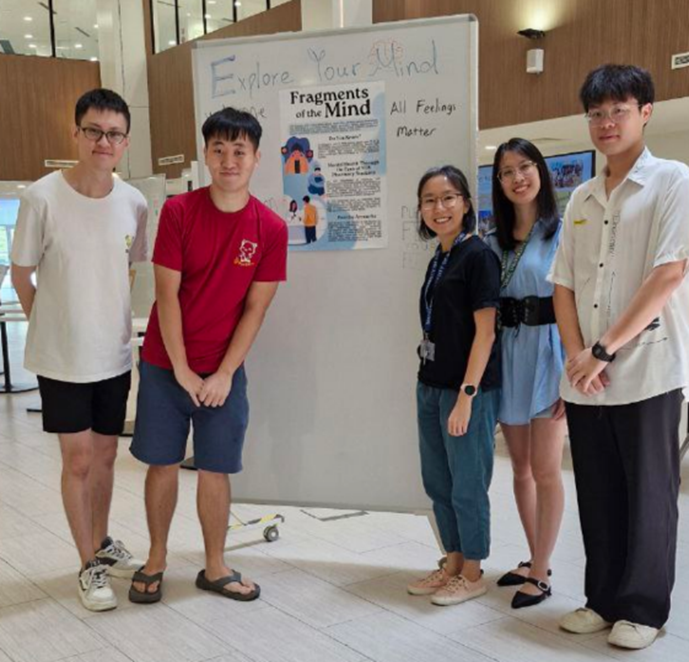
We also had the privilege to invite two visitors who viewed our exhibition to share their thoughts.
I was like a child again, curious and chuckling, as I flowed through this rich exhibition filled with heart. The exhibits were so DIY tactile, and I found that precious in this digital age. Being able to playfully interact with these handmade exhibits which felt like toys such as a sensory scrapbook, figurine or visual art piece, and listen to an original composition of a complex song or soundscape, evoked my senses, imaginations and empathy. It was a moving experience.
This immersion brought me closer to the artists the students responded to, the student-makers themselves, and the people with mental health conditions.
Thank you team, for shedding light on the research, the thoughtful curation and space to meditate, feel, bond and support one another in tough times. The chuckling was needed on a busy day.
Some art pieces are shared here for readers who missed the exhibition.
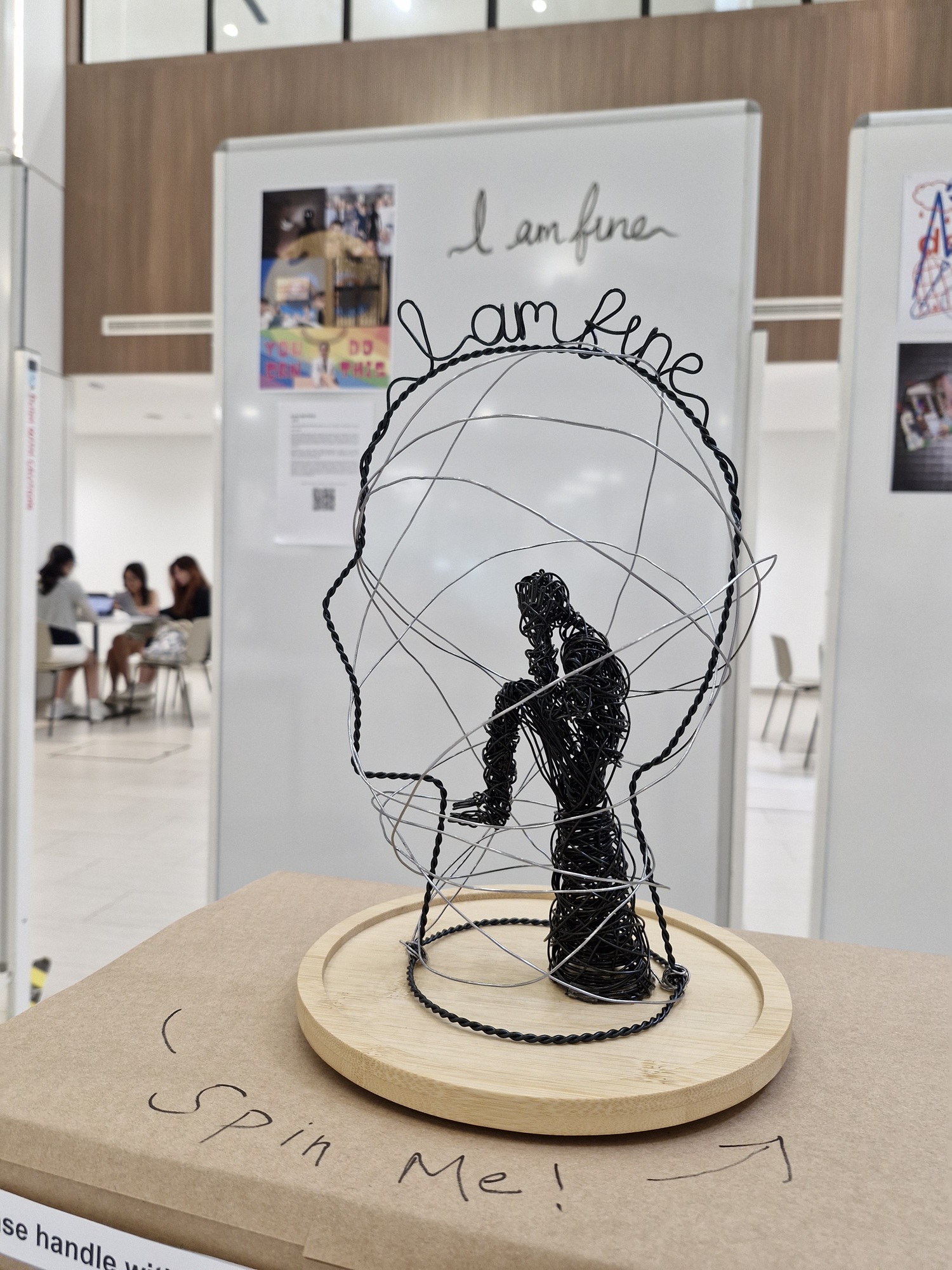
"I Am Fine?" —
Unmasking the Silence Behind Bipolar Depression
2025
Liu Jiaxiao; Tay Jun Zhi; Aurellia Grace Tandase; Ng Kei En, Heidi; Danielle Chong Xue Jun
Sculpture; metal wire and wood
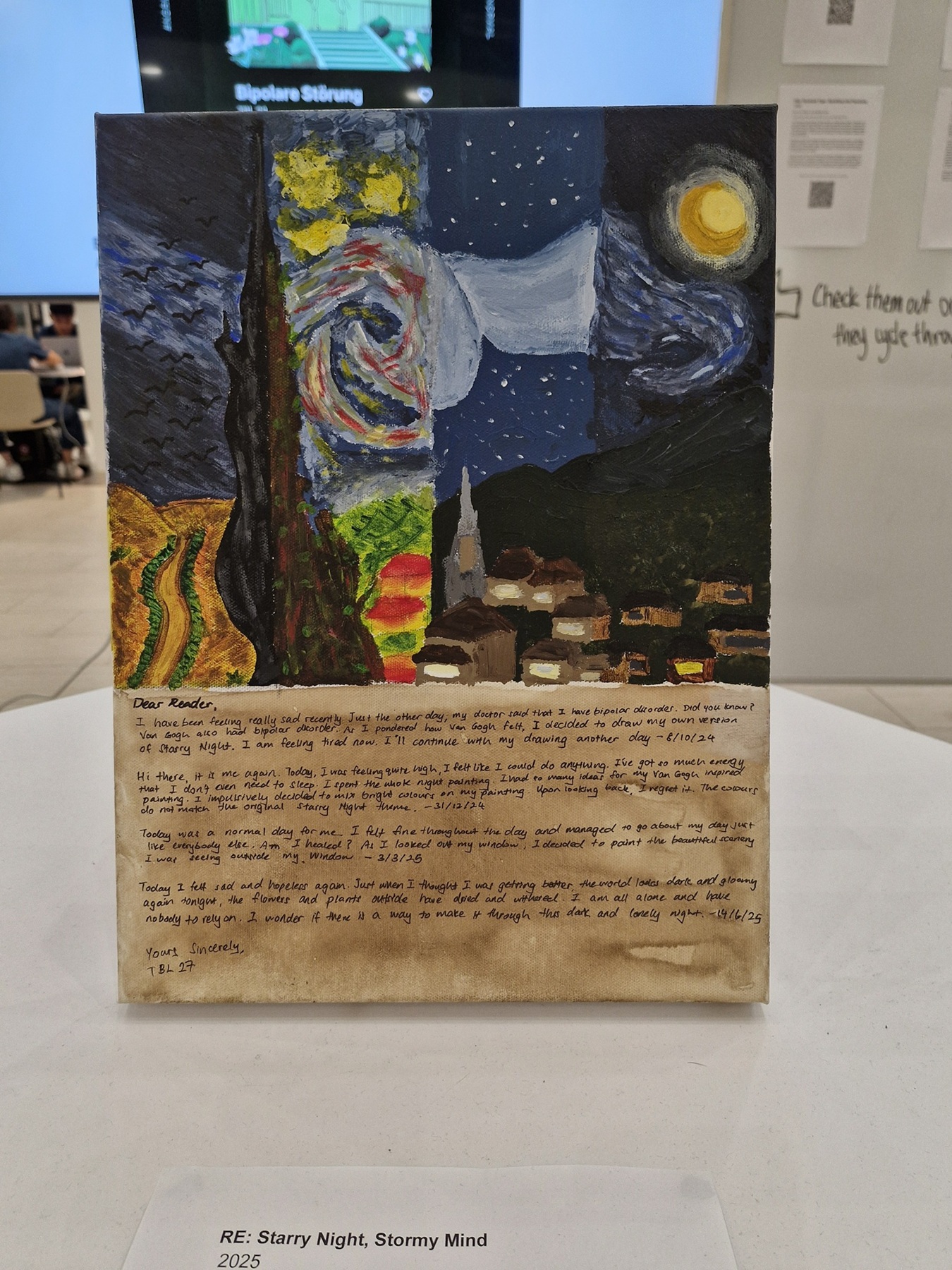
Starry Night, Stormy Mind
2025
Isaac Choi Kah Wei; Juu K Zin Thaung; Ooi Jie Yin; Park Chaeyeon; Ryan Ong Yi Jiat
Painting; Acrylic Paint, Canvas
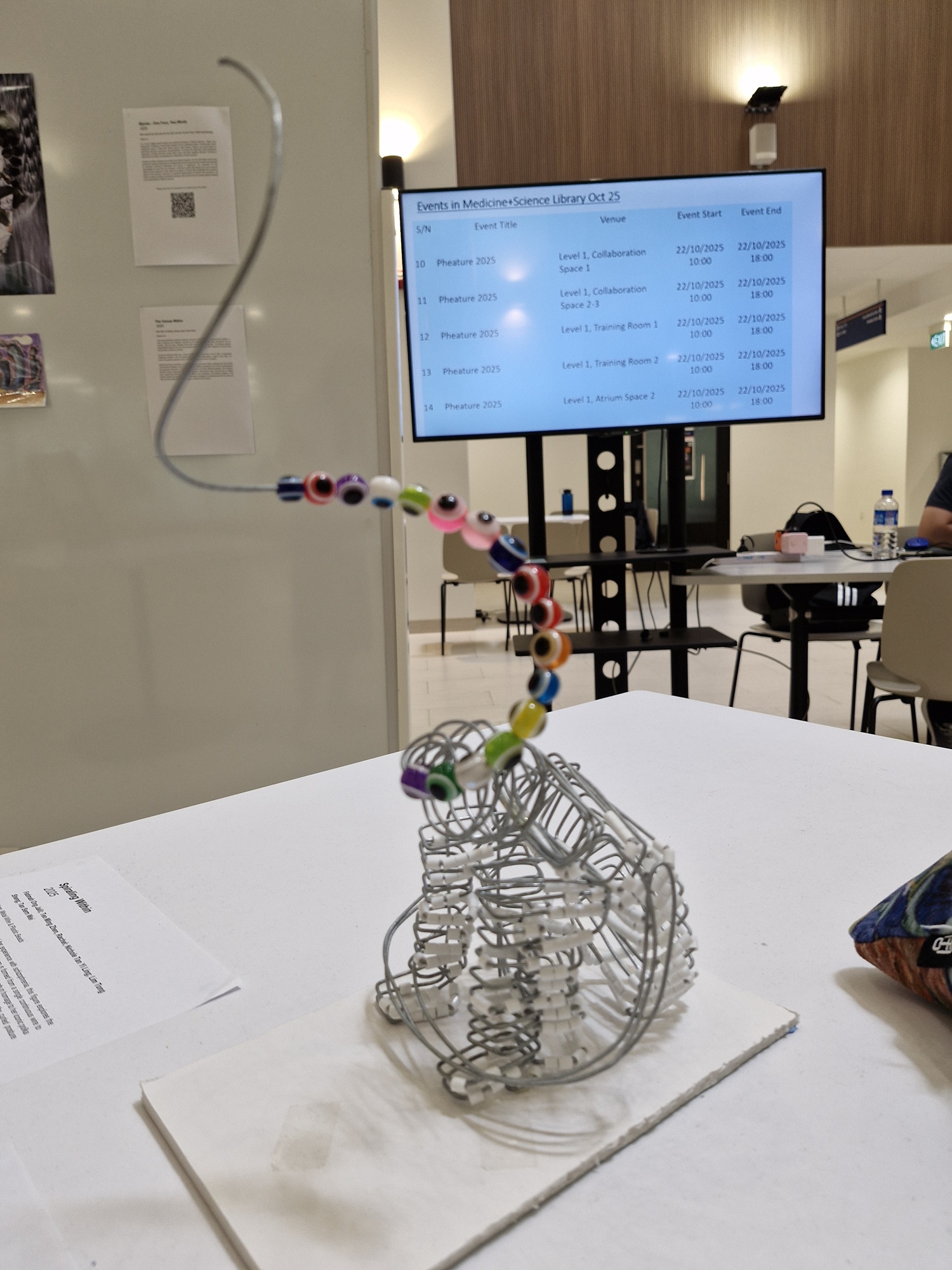
Spiraling Within
2025
Fatimah Ong Jalil; Teo Ming Zhen, Rachel; Nichole Tan Yi Ling; Lim Tong Sheng; Tan Sern Wei
Sculpture; Metal Wire & Plastic Beads
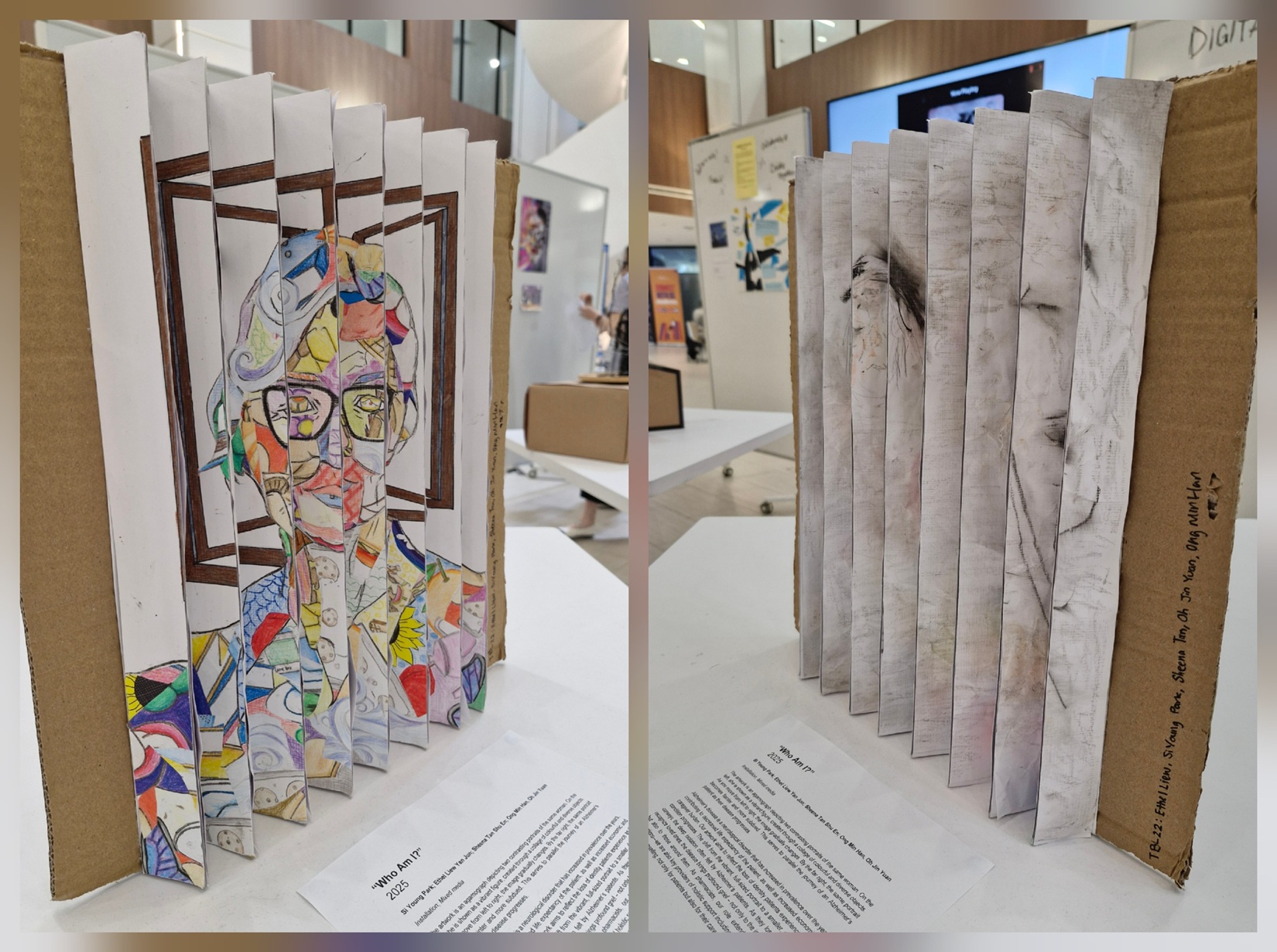
“Who Am I?”
2025
Si Young Park; Ethel Liew Yan Jun; Sheena Tan Shu En; Ong Min Han, Oh Jin Yuan
Installation; Mixed media
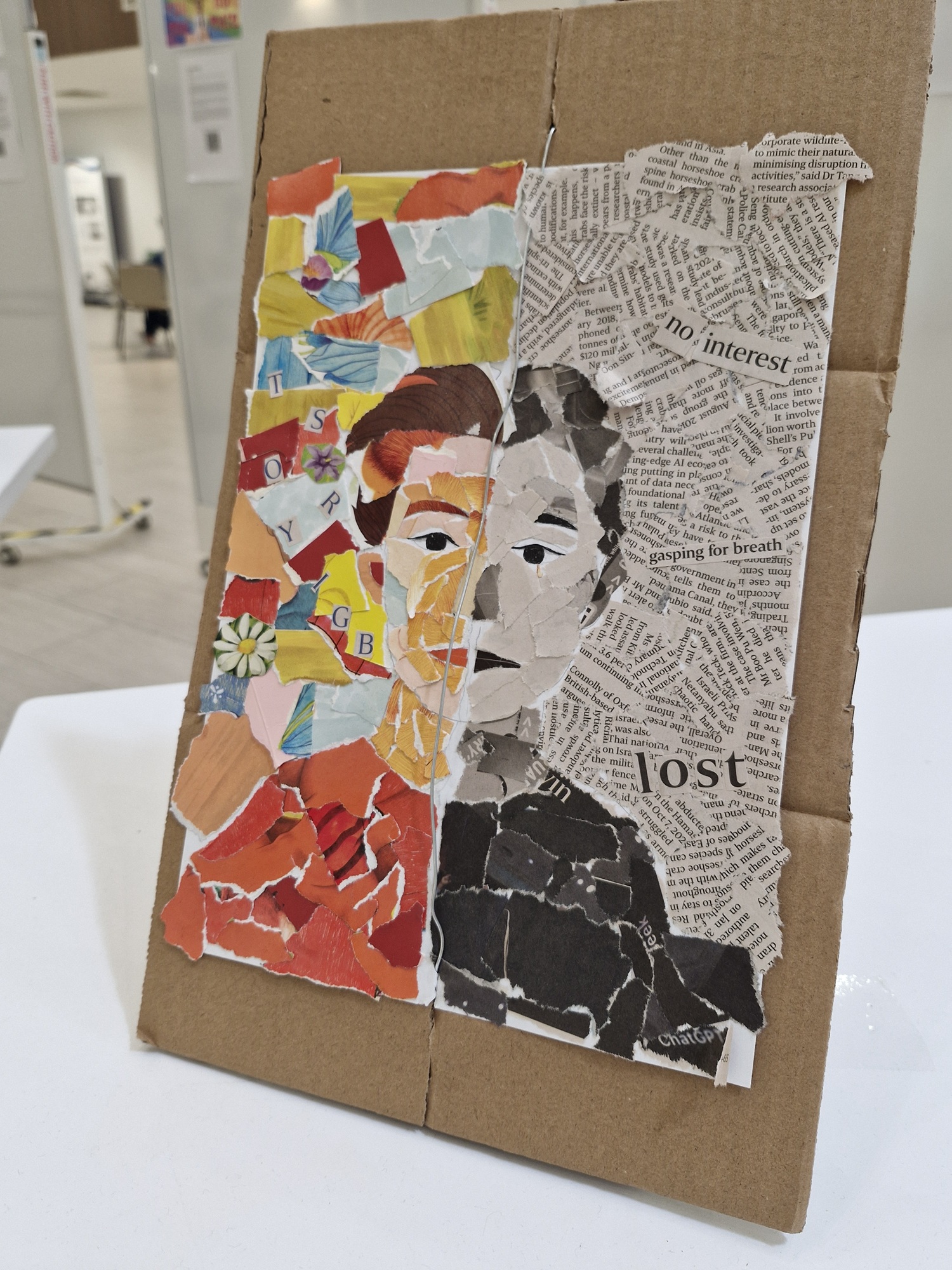
Two Sides, One Mind
2025
Byun Jaemin; Lim Jia Qi; Ng Si Hern; Wong En Ya; Yap Yan San
Mixed media collage; Paper and Wire
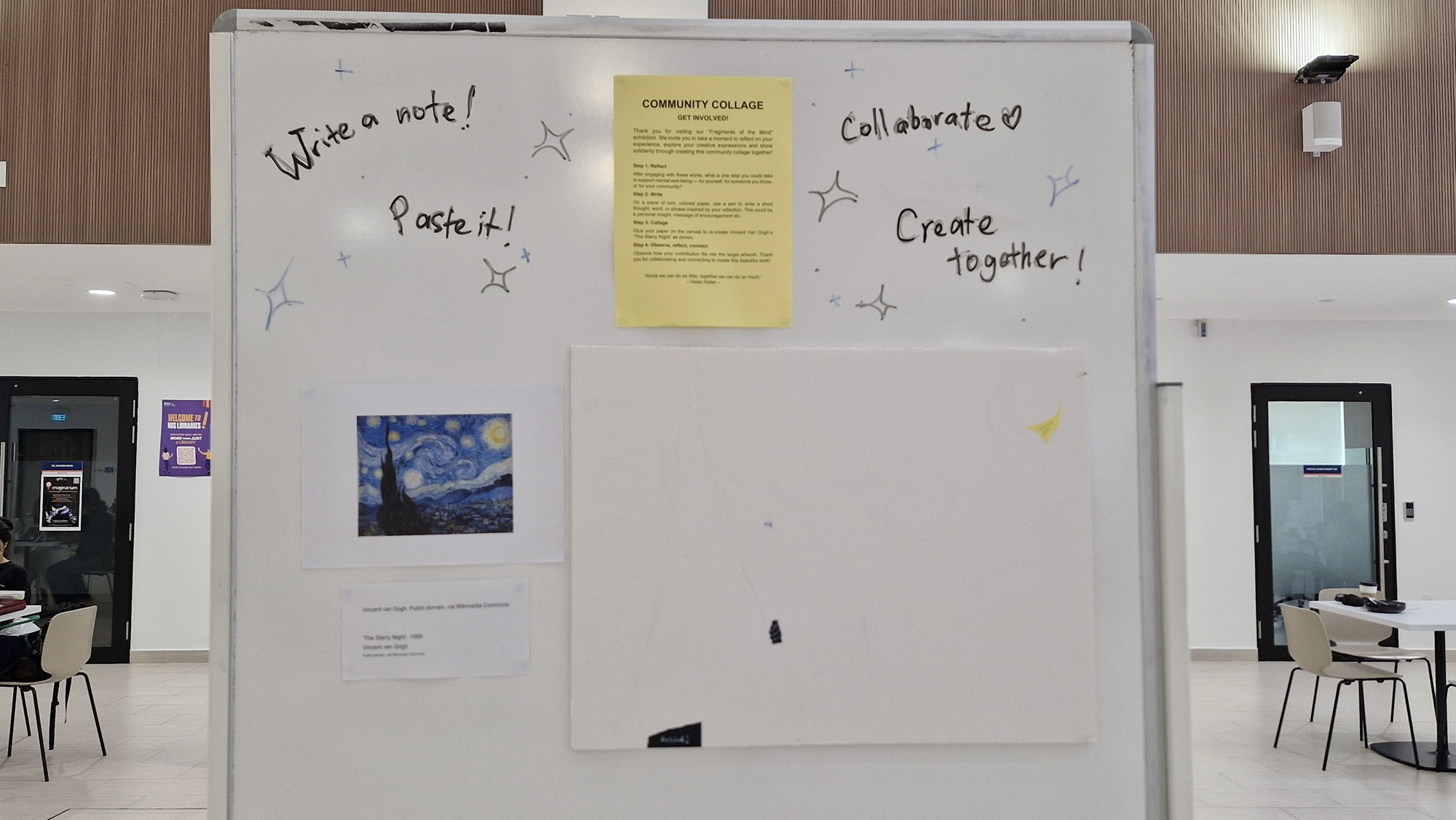
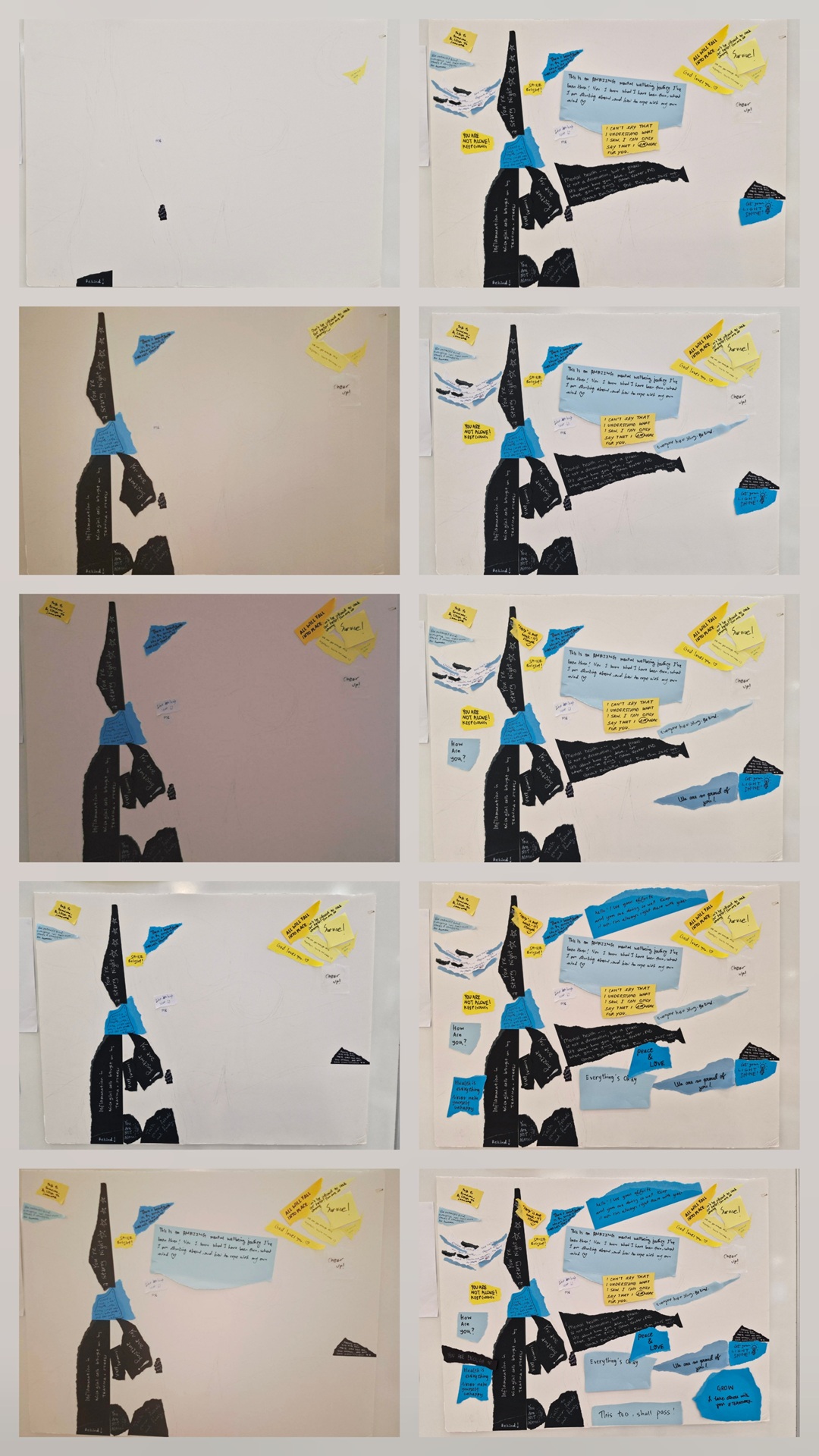
Besides individual art pieces, the exhibition featured a community collage which invited visitors to reflect on their experience, write a note on a piece of coloured paper and paste it on a canvas, to re-create The Starry Night by Vincent Van Gogh, an artist who was believed to have suffered from a few different mental conditions. The progress of the collage captured over 10 different days are featured below. The final masterpiece is testament of what Helen Keller once said, that “Alone we can do so little, together we can do so much”.
Community collage board on the 1st day of the exhibition.
A collage of the progress of the collage captured over 10 different days during the duration of the exhibition. Bottom right is the final re-creation of The Starry Night 😊
Article by Mr Goh Jun Hui and Mr Jack Liu Jiaxiao (Class of ’26)
Share this article:
Stay connected with NUS Pharmacy and Pharmaceutical Sciences!
Subscribe to receive PharmConnect Newsletters & announcements from us.